A George business does not need a website simply because its competitors have one. It needs a reliable place to explain what it offers, who it can help and how to take the next step. Start by looking at the questions people ask before they become customers.
Build around the actual enquiry
A pet owner comparing grooming services needs different information from a procurement manager ordering uniforms. List your services in the language customers use. Explain the location or service area, what an appointment involves and how to make contact. Show prices where you can keep them accurate; explain the quote process where the job must be assessed first.
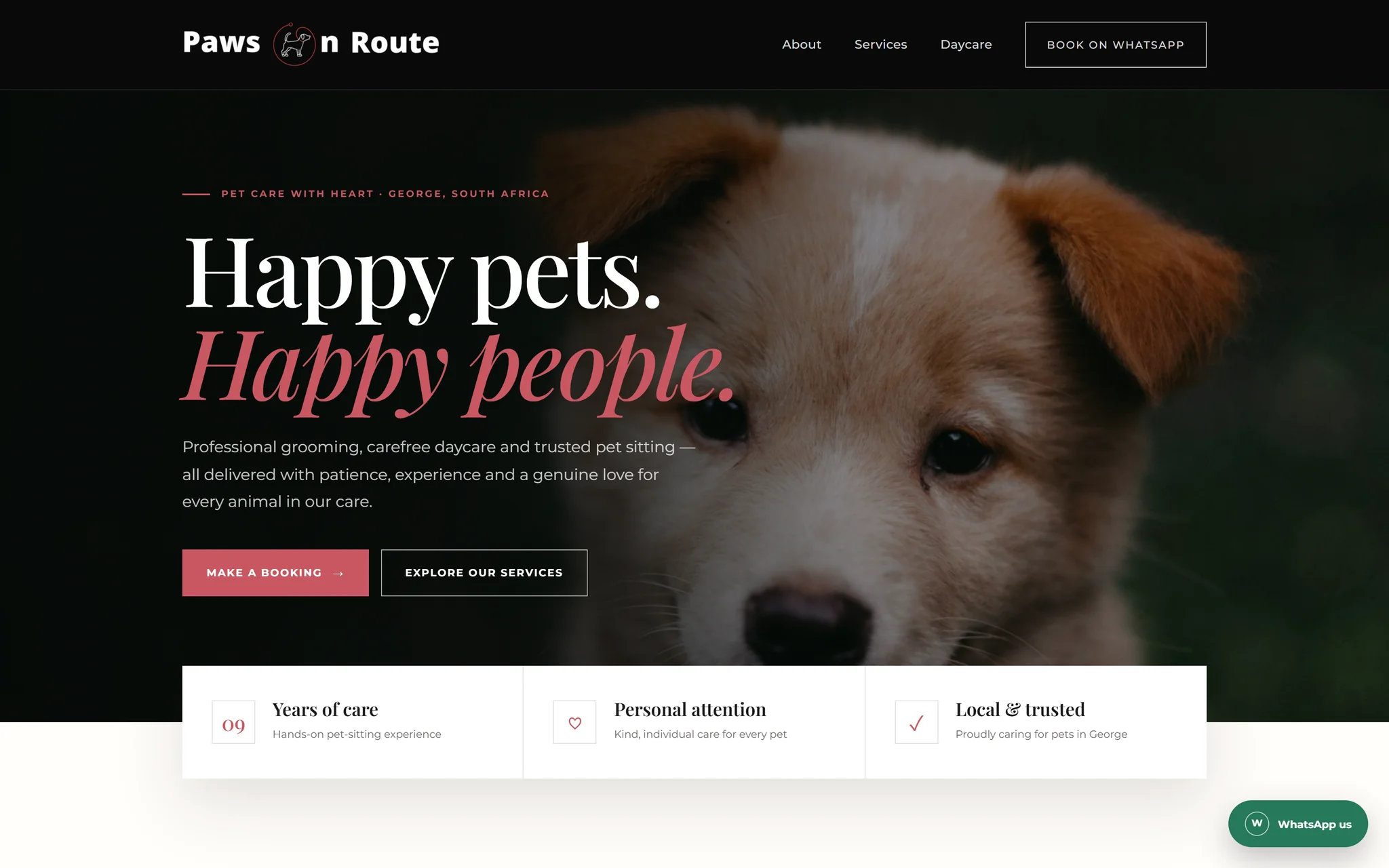
For a concrete example, our Paws On Route project separates pet-care services and provides direct contact routes. It illustrates a service-led structure, not a claim that any particular layout guarantees bookings.
Use social media and your website for different jobs
A Facebook or Instagram page can help people discover recent work, ask questions and share recommendations. A website gives you a stable place to organise service details, coverage, project evidence and the enquiry process under your own domain. Social profiles can appear in search too; neither channel guarantees visibility or enquiries.
Keep the two connected. Link your profile to the relevant service page, keep contact details consistent and give visitors a clear route back to the person who answers enquiries. If social media already brings suitable customers, keep using it. A website is useful when repeated questions, scattered information or a complicated quote process need a clearer home.
Before assuming you need a rebuild, check where the journey breaks: can customers find the service, understand whether it suits them, see relevant work and reach you on a phone? Use the enquiry checklist to test those steps and the Garden Route search checklist to review discovery. Diagnose the problem before choosing the platform or buying traffic.
Write a one-page brief before choosing a design
Use these prompts with the person who answers your customer enquiries. Each answer should become either useful page content or a clear handover responsibility:
- Customer: Who is the service for, and which requests must you decline?
- Coverage: Do customers visit you in George, or do you travel? Name the actual service area and any travel conditions.
- Decision: What must someone know before asking for a quote: availability, service options, preparation or a price range?
- Evidence: Which recent job can you explain with your own photographs and permission to publish?
- Contact: Who receives a WhatsApp message or form enquiry, and what information do they need to reply?
- Upkeep: Who updates prices, hours and availability after launch?
For example, a mobile service should explain where it travels before asking for a booking address. A shop should make its visiting information easy to find. These are planning examples, not claims about a particular client's results. Use the developer comparison checklist to turn the brief into a scope you can compare.
Make the information trustworthy
Use photos of the actual business and work, with permission. Identify the people responsible for the service. Keep opening hours and phone numbers consistent with the business profile. Only list qualifications, testimonials and coverage that the business can substantiate.
Avoid creating a page for every nearby town unless each page answers a genuinely different customer need. A clear service-area explanation is more useful than repeating the same copy with a different place name.
Test before spending on traffic
- Open the site on a narrow phone screen and follow the full enquiry journey.
- Check that a message actually reaches the intended inbox; a green success message alone is not proof.
- Make phone and WhatsApp actions visible without covering the page.
- Test the busiest service page on a constrained connection, not just the homepage on office Wi-Fi.
Our George web design service explains how we work locally. For a new build, bring an existing URL, your priority services and examples of good enquiries. We can then scope the website design around a useful outcome rather than a page count.