Mobile-first design starts with a constrained viewport and the actions a visitor needs to complete. It is not a claim that every business has the same mobile traffic share. Use your own audience data where available, and make the site work across devices regardless.
Test the useful journey
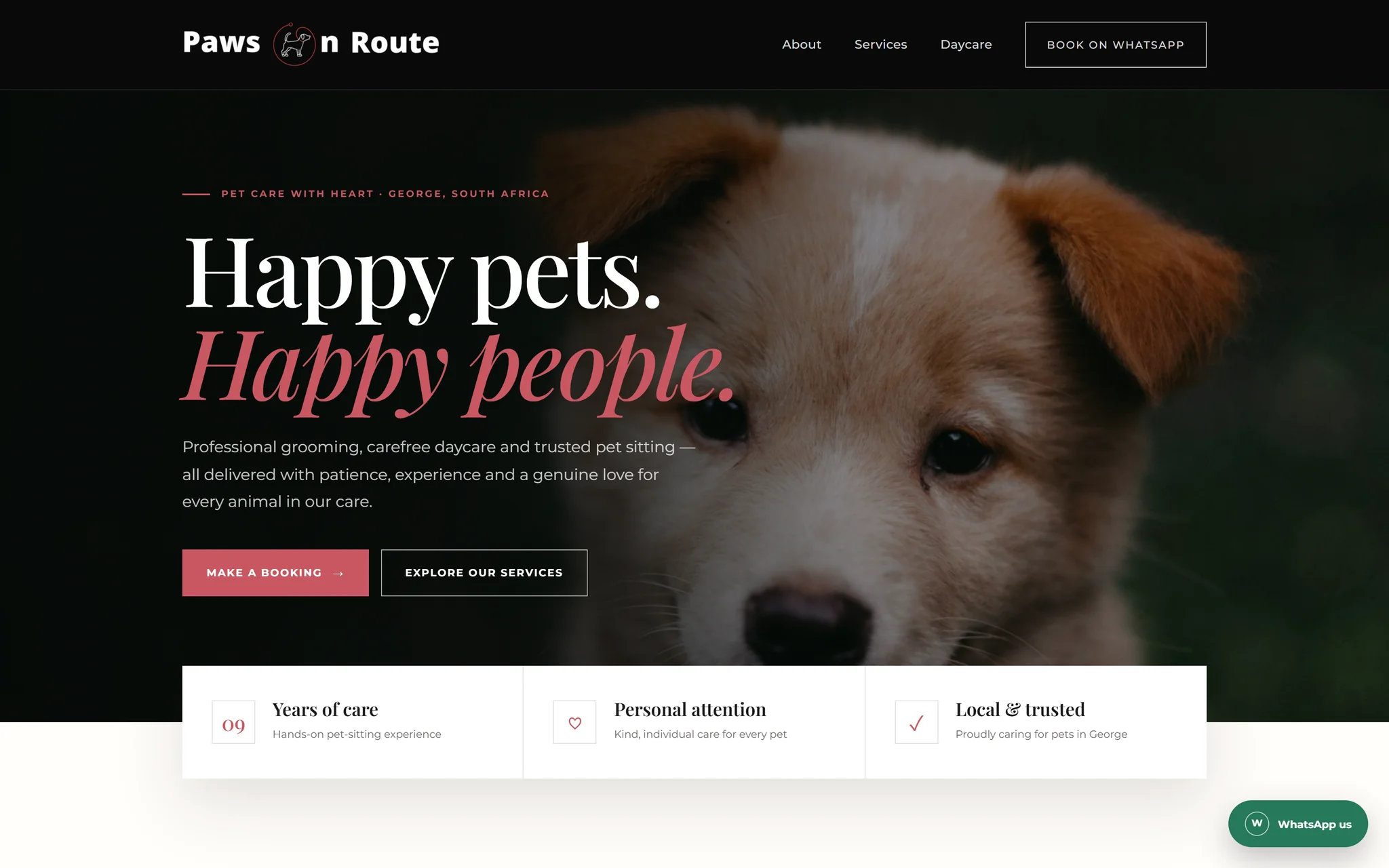
Begin on the page a customer is likely to find through search, not always the homepage. Can they identify the service, read the evidence and make contact without hunting through a menu? A local-service example such as Paws On Route makes service information and direct contact a useful test path.
Check long headings, pricing ranges, tables and project galleries at narrow widths. Avoid fixed-width components that create horizontal scrolling. Allow text to wrap and zoom instead of shrinking it until it technically fits.
Use real controls
Buttons and links should have understandable names and comfortable targets. Menus must work with keyboard input and retain visible focus. Forms need labels, appropriate input types and understandable validation messages. An error should not clear everything the visitor has written.
Test with the on-screen keyboard open. Confirm that the submit button remains reachable and that a sticky contact bar does not obscure fields or privacy information. Native select controls can be more dependable than elaborate custom menus when the task is simply choosing a service.
Respect preferences and connections
Provide a static alternative to decorative motion and a pause control for ongoing animation. Reduced-motion preferences should actually change the experience, not merely shorten one transition while leaving a video looping.
Load images at appropriate sizes and defer non-critical content. A mobile screenshot is not a performance measurement, and an automated accessibility score is not a complete usability review.
Before sign-off, record the tested device, viewport, browser and tasks completed. Our website design process includes these checks alongside responsive styling. The website speed guide explains how to measure loading separately from layout.