
Illumi
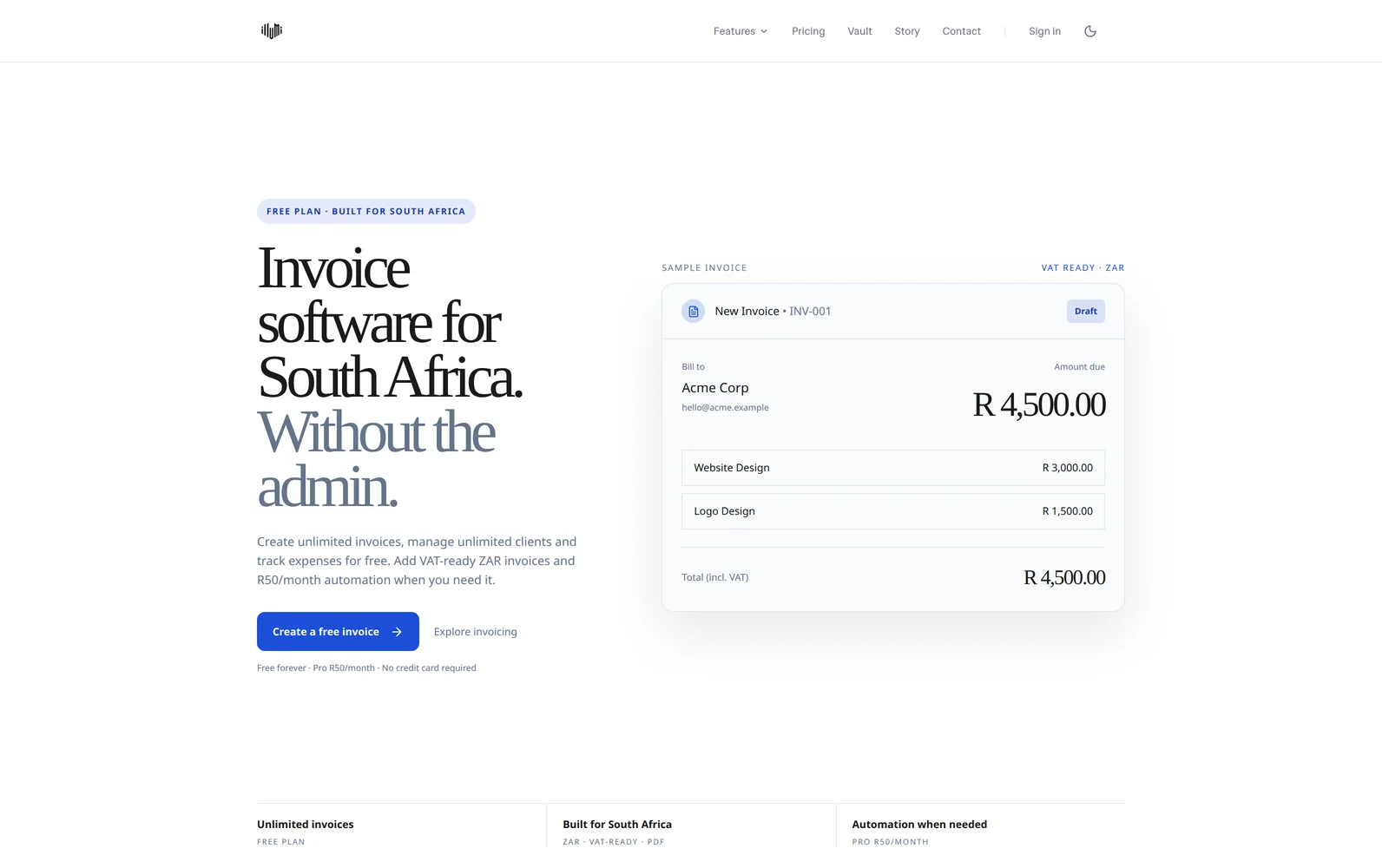
A Next.js application with invoicing, data and email/payment workflows. Relevant application capability; the public study does not establish an AI rescue history or a measured launch-success rate.
Examine the projectAI app rescue · Build, deployment and handover
A working builder preview and a working production release are different checkpoints. Pixaloom helps assess the gap in an existing AI-built web app: the build, runtime, domain and the business journey that must still work after publication.
Request a launch diagnosis Prepare your project briefPixaloom · Based in George, working with South African businesses. Updated .
01 · Plan the work
Does the production build fail, does the deployed app fail to start, or does the page load while a form or API fails? Those need different evidence. Keep the failed command, runtime version, release identifier and a redacted error excerpt. A new domain or another hosting provider will not automatically fix a code or configuration problem.
We identify the actual framework and deployment path before recommending hosting changes. A static React build, a server-rendered Next.js app and a backend function have different runtime requirements. The existing repository and platform settings establish what the application needs; the AI tool used to generate it does not.
02 · Plan the work
A preview can have settings that were never supplied to production. We inventory required configuration by purpose and environment, check where it is used, and separate browser-visible values from server-only credentials. Secret values belong in the appropriate protected store, not a public source file or diagnostic screenshot.
Domain checks follow the approved canonical address through DNS, HTTPS and redirects. For an authenticated app, the published address must also fit its login configuration. For a form or payment integration, provider access and callback destinations need their own verification. A loaded homepage proves none of those workflows.
03 · Plan the work
Choose one core journey and test it on the deployed URL with approved test data. A contact form needs evidence at the receiving destination, not just a success message. A payment integration needs the agreed provider event and application state; test mode must be clearly distinguished from a real transaction. Never use customer money or records for an improvised smoke test.
Record the release, changed files, test result, remaining limitations and recovery method. The handover identifies the owner of the domain, repository, hosting and third-party accounts. If a provider account, missing content or a broader defect blocks launch, the result should say so rather than claim the app is production-ready.
Cloudflare’s framework guidance distinguishes supported Next.js deployment paths. We check compatibility with the project’s existing adapter and runtime; migration to a different stack is a separate scope. A rescue should retain a recoverable release process and use the owner’s authorised publishing workflow.
| Checkpoint | Useful evidence | Acceptance condition |
|---|---|---|
| Build | Runtime, build command and redacted failure | The exact release builds with the agreed environment |
| Runtime | Deployment identifier and redacted server/API error | The required page and backend start successfully |
| Domain | Approved host and observed redirect path | HTTPS and canonical redirects reach the release |
| Business journey | Controlled input and receiving-system result | The agreed task completes, including its failure state |
Deployment help uses the existing rescue packages after review. Hosting subscriptions, domain renewals and provider usage are separate costs. A build repair, release configuration and substantial migration are different scopes. We confirm access, an acceptance journey and the delivery estimate before paid work. A brief diagnosis is not a comprehensive code audit or a guaranteed launch deadline.
Review rescue packages and termsRelevant Pixaloom work
These are archived project studies, not measured sales, ranking or rescue outcomes. External websites can change after the captured work.
A Next.js application with invoicing, data and email/payment workflows. Relevant application capability; the public study does not establish an AI rescue history or a measured launch-success rate.
Examine the projectAn actionable starting point
Mark what you have checked to prepare a useful project brief. Your selections stay on this page until you leave or reload; this tool does not submit an enquiry or inspect your website.
We assess the resulting code, runtime and hosting requirements. The first review establishes whether the available project and access fit the rescue service. A builder name alone is not a promise of compatibility.
No migration is assumed. We investigate the existing supported deployment path first. A change of platform needs a reason, an agreed scope and a recovery plan.
No. Sign-off uses the agreed task on the live URL, its receiving-system evidence and relevant failure handling. Unresolved limitations are recorded in the handover.